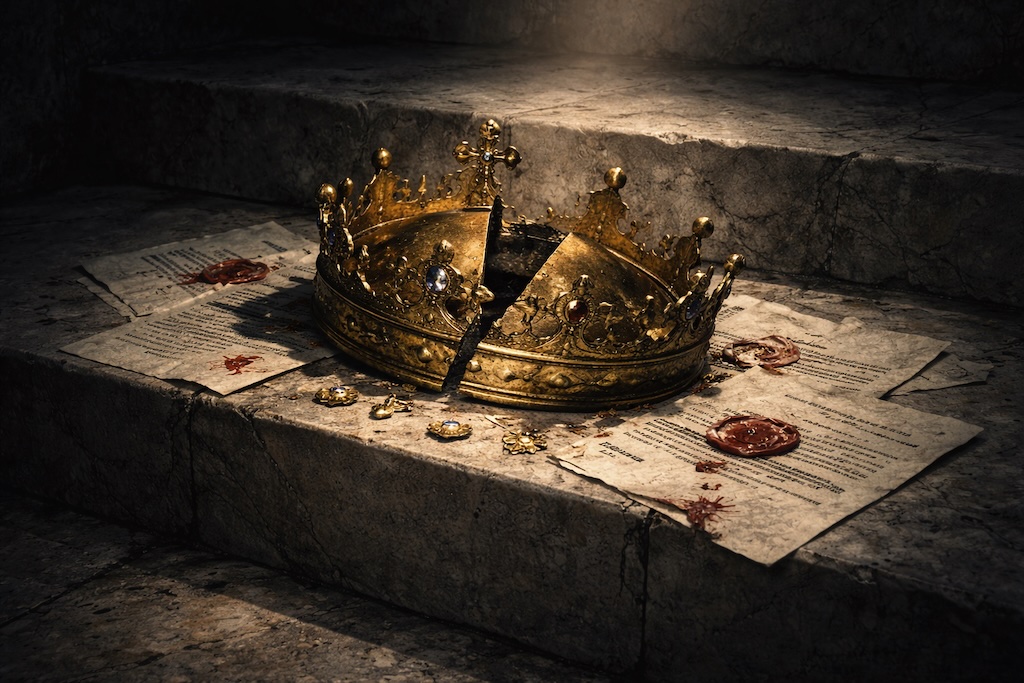
A Scandal That Shook the Royal Family
The world was shocked when Andrew Mountbatten-Windsor, who used to be known as Prince Andrew, Duke of York, was arrested on February 19, 2026. It was his birthday, and he was 66. The charge was suspicion of misconduct in public office, which is a common-law crime that can lead to life in prison. He was the first senior member of the British royal family to be arrested by the police in modern times.
The Thames Valley Police made the arrest at the Sandringham Estate in Norfolk. Andrew had just moved there a few weeks before from the Royal Lodge in Windsor. At the same time, officers carried out search warrants at homes in Berkshire and Norfolk. The National Police Chiefs' Council only gave the Home Office 30 minutes' notice before the operation, which they called "routine practice."
Andrew was held at Aylsham Police Station for about 11 hours before being released "under investigation," which means he hasn't been charged or cleared of wrongdoing. He was photographed, fingerprinted, and had a DNA sample taken as part of the normal booking process.
A Comparison from History
The arrest has a clear historical echo. King Charles I was the last senior royal to face the authority of the state in such a dramatic way. He was arrested and tried during the English Civil War. Charles I was found guilty of being a tyrant, traitor, enemy of the state, and murderer in 1649. He was beheaded at Whitehall when he was 48 years old, after Oliver Cromwell's Parliamentarian forces beat the Royalists.
Three years after Cromwell died in 1658 and the monarchy was restored, Charles I's son, Charles II, had Cromwell's body dug up and "executed" as a way for the king to get back at him.
(It's important to note that Princess Anne was found guilty of breaking the Dangerous Dogs Act in 2002 when her bull terrier bit two kids in Windsor Great Park. However, this case is much more serious.)
The Epstein Files: What They Showed
On January 30, 2026, the U.S. Department of Justice released more than 3 million pages of documents about convicted sex offender Jeffrey Epstein. This started the chain of events that led to Andrew's arrest. There were millions of pages, and some of them were emails that seemed to show Andrew systematically sending private government information to Epstein while he was the UK's Special Representative for International Trade and Investment from 2001 to 2011.
The Briefing on Afghanistan
The most explosive document was a secret report called "Helmand: High Value Commercial Opportunities for Foreign Investment." It was written by British officials from the Provincial Reconstruction Team in Helmand Province, Afghanistan, in December 2010. The briefing gave details on:
Important mineral deposits with a lot of value, such as gold, uranium, iridium, thorium, and marble
Potential oil and gas reserves
The "possibility of cheap extraction" of raw materials
DFID (the Department for International Development) is working on making Lashkar Gah and Gereshk safe for businesses.
On Christmas Eve 2010, Andrew sent the document directly to Epstein and called it a "confidential brief." He wrote in a note that he planned to share it with his network, which included people in Abu Dhabi, and asked Epstein for "comments, views, or ideas on who else I could show this to to get some interest."
At the time, Helmand Province was a war zone. There were British soldiers fighting and dying. The British government paid for the reconstruction work. Sir Vince Cable, who was in charge of business while Andrew was trade envoy, said that sharing the Afghan briefing was "appalling behavior."
A Leak Pattern
The Afghan document wasn't the only one. The Epstein files show that Andrew may have also sent Epstein official government reports from trade missions to Singapore, Hong Kong, Vietnam, and China. In one case from November 2010, Andrew is said to have sent Epstein reports from his special assistant, Amit Patel, just five minutes after getting them. He also sent Epstein a second set of zipped files called "Overseas Bids."
Government guidelines make it clear that trade envoys must keep sensitive business and political information they learn on official visits secret. Even after you leave the job, you still have these duties.
The Business Plan
The network of private business interests that grew around Andrew's public role may have been the most damaging thing. Emails show that David Stern, Andrew's liaison, suggested to Epstein in July 2010 that they open a private investment office in London with a satellite office in Beijing. The plan was clear: "We very discreetly include PA and use his 'aura and access' You make the investments, and I run the business on a day-to-day basis." "PA" stood for Prince Andrew. This was talked about while Epstein was still under house arrest for a sex crime he committed in 2008.
Andrew also seemed to introduce Epstein to high-ranking government officials, like Sheikh Abdullah bin Zayed Al Nahyan, the UAE's foreign affairs minister. He also reportedly asked Epstein for advice on how to manage his own investments through a trust.
The Slow Unraveling
It didn't happen overnight that Andrew fell. It was a slow, steady erosion that took place over many years:
2011: Had to quit as trade envoy when news of his friendship with Epstein came out.
November 2019: He gave a terrible interview on BBC Newsnight with Emily Maitlis that was widely criticized by the media and the public. In it, he showed no sympathy for Epstein's victims and made the now-famous claim that he couldn't sweat because of an injury he got in the Argentinean war.
2020: Stopped doing royal duties in public for an unknown amount of time.
In 2022, they settled a civil lawsuit brought by Virginia Giuffre for what was said to be £12 million ($16.2 million). Giuffre said that when she was 17, Epstein sold her to Andrew. The settlement did not include any admission of guilt.
In October 2025, he gave up his royal titles and honors. A newly released email from February 2011, sent more than two months after Andrew publicly said he had cut ties with Epstein, showed him telling the financier, "We are in this together and will have to rise above it."
King Charles III officially took away all of Andrew's titles, including "Prince" and "His Royal Highness," in October 2025. He changed his name to Andrew Mountbatten-Windsor.
February 2026: Moved from the Royal Lodge in Windsor to the Sandringham Estate.
February 19, 2026: Arrested for allegedly doing something wrong while in public office.
The Woman Who Started It All: Virginia Giuffre
Virginia Roberts Giuffre is the main character in this story. She killed herself in April 2025 when she was 41 years old. She was one of the most well-known people to accuse Epstein, and she had been fighting for justice for years. "Nobody's Girl: A Memoir of Surviving Abuse and Fighting for Justice," her memoir that came out after her death, made specific claims about Andrew.
"Today, our broken hearts have been lifted by the news that no one is above the law, not even royalty," her family said in a statement after Andrew's arrest. Virginia did this for you, survivors everywhere.
Sky Roberts and his wife Amanda, Virginia's father, said their feelings were "mixed." They were happy that Virginia was vindicated, but sad that she wasn't there to see it. Maria Farmer, one of the first Epstein survivors to report abuse (in 1996), said that the arrest was "just the beginning of accountability and justice brought forth by Virginia Roberts Giuffre, a young mother who loved her daughter so much that she fought the most powerful people on earth to protect her."
The King's Answer
Reports say that King Charles III didn't know ahead of time that his brother would be arrested. He was seen arriving at the start of London Fashion Week that same day, which was a planned event, and later made a carefully worded statement:
"I have learned with the deepest concern the news about Andrew Mountbatten-Windsor and suspicion of misconduct in public office. What now follows is the full, fair and proper process by which this issue is investigated in the appropriate manner and by the appropriate authorities. In this, as I have said before, they have our full and wholehearted support and co-operation. Let me state clearly: the law must take its course."
The Prince and Princess of Wales backed what the King said. On the same day, other members of the royal family went to public events.
King Charles had been heckled in public in Clitheroe, Lancashire, just a few weeks before, on February 9. Someone in the crowd yelled, "Charles!" How long have you known about Epstein and Andrew? The crowd booed and chanted "God save the King."
The Investigation Expands
The arrest of Andrew is not the end of the story. There are now several investigations going on:
The misconduct in public office investigation is being run by Thames Valley Police, who say it could take weeks to years.
A second Thames Valley Police investigation is looking into a report that a woman was taken to a Windsor address in 2010 "for sexual purposes."
The Metropolitan Police in London is looking into whether members of Andrew's royal protection team may have turned a blind eye to illegal activity on Epstein's Caribbean island. We are finding and getting in touch with both current and former security officers.
Police Scotland is looking into the information in the Epstein files.
Several police departments in the UK are looking into claims that Epstein used his private jet to transport women to regional airports, with Andrew reportedly being on at least one of these flights.
The Business and Trade Committee of Parliament is thinking about starting a formal investigation into the trade envoy system and Andrew's part in it.
The UK government is thinking about passing a law that would take Andrew out of the royal line of succession. Right now, he is eighth in line to the throne.
Mandelson Falls Too, Not Just a Prince
Andrew isn't the only famous person affected by the Epstein files. Just four days after Andrew's arrest, on February 23, 2026, Lord Peter Mandelson, a former British ambassador to the United States and a big name in the Labour Party, was arrested at his home in Camden, north London, on the same charge: suspicion of misconduct in public office.
Mandelson, who is 72 years old, is being looked into for allegedly giving Epstein government information that could affect the market while he was a cabinet minister under Prime Minister Gordon Brown during the financial crisis from 2008 to 2010. Emails from the Epstein files seem to show him giving his opinion on possible policy changes, talking about a planned tax on bankers' bonuses, and confirming a eurozone bailout that was about to happen before it was made public. The files also showed that Epstein sent $75,000 in cash to accounts linked to Mandelson or his partner.
In September 2025, Prime Minister Keir Starmer fired Mandelson as ambassador to the U.S. after earlier revelations from the Epstein files showed that he had called the financier "my best pal" in a handwritten birthday note. He left the Labour Party and the House of Lords in early February 2026, saying he wanted to spare the party "further embarrassment."
Prime Minister Starmer's political crisis has gotten worse since his arrest. His choice to make Mandelson an ambassador almost cost him his job.
The More Important Question
The original article's point about Andrew's case and what it says about power, privilege, and accountability is clearer than ever. People are still angry that Andrew and now Mandelson are being investigated for abuse of power, but not for the sexual exploitation that Epstein's network made possible.
Jeffrey Epstein was more than just a predator. The files paint a picture of a man who worked at the crossroads of intelligence, finance, and political power. He built a network of compromising information based on the sexual exploitation of minors to gain power over some of the world's most powerful people. It is still unclear whether he worked for one or more intelligence agencies, but the number of powerful people around him and the extent of his influence are still shocking.
Andrew's case does bring up the question that the first article asked: How many other countries would a member of the ruling family or the brother of a head of state be arrested and investigated for a crime? The British system, despite its shortcomings, has shown something in this case: a willingness, albeit delayed, to hold the powerful to the same legal standards as everyone else.
Andrew has lost his title, his home, his public role, and the Crown's protection. The original article said he is a man who will have to deal with the consequences of losing his power. It is still unclear if those consequences will eventually go beyond bad behavior to include the sexual abuse claims.
The dominoes are falling down. And at least in Britain, they are hitting both princes and lords.